> ## Documentation Index
> Fetch the complete documentation index at: https://help.goghl.ai/llms.txt
> Use this file to discover all available pages before exploring further.
# Increase the SMS Sending Limit
> Stop the 'SMS Sync is sending a large number of messages' warning by raising Android's built-in outgoing SMS limit.
Many Android devices have a built-in restriction that stops you from sending more than **30 SMS messages within a 30-minute window**. When your gateway crosses that limit, Android shows a warning and can block further messages:
> **SMS Sync is sending a large number of SMS messages. Do you want to allow this app to continue sending messages?**
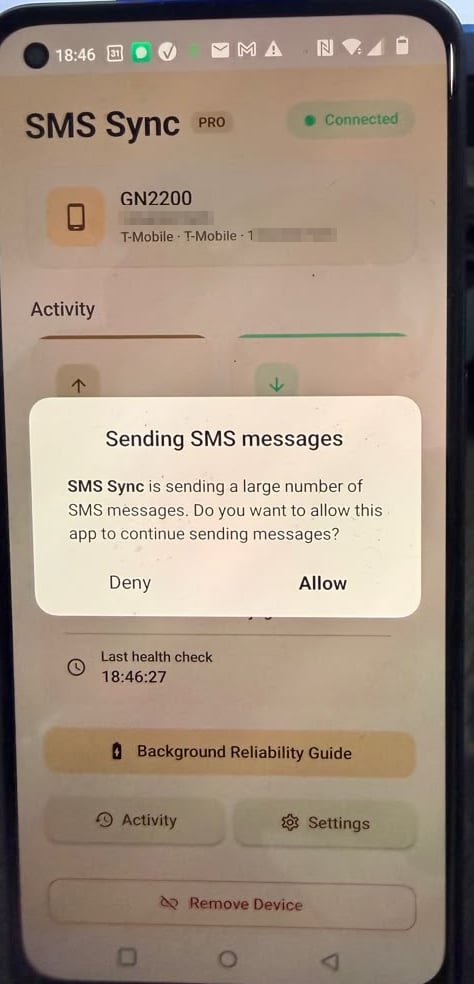 This is an Android safeguard, not a limit inside your CRM. You can raise it manually with a small tool we provide, so high-volume sending no longer trips the alert.
This changes a hidden system setting on your phone using **Android debugging**. It's safe and reversible, but only do it on a device you own and control. A few manufacturer ROMs gate this behind an extra toggle - see [Extra step for some phone brands](#extra-step-for-some-phone-brands).
## What you'll need
* The **Android phone** running your SMS gateway (Android 11 or newer for the Wi-Fi method).
* A **Windows, macOS, or Linux computer**.
* **One** of these connection methods:
* **USB (recommended):** a **USB cable**, and (on Windows) a working USB driver for your phone. If Windows doesn't recognize it, install your manufacturer's [OEM USB driver](https://developer.android.google.cn/studio/run/oem-usb?hl=en).
* **Wi-Fi (alternative):** the phone and computer on the **same Wi-Fi network** (Android 11 or newer). No cable or drivers needed.
You do **not** need to install ADB or any developer tools yourself. The tool below downloads everything it needs automatically.
***
## Step 1: Turn on Developer Options
The tool needs **Developer Options**, which is hidden by default.
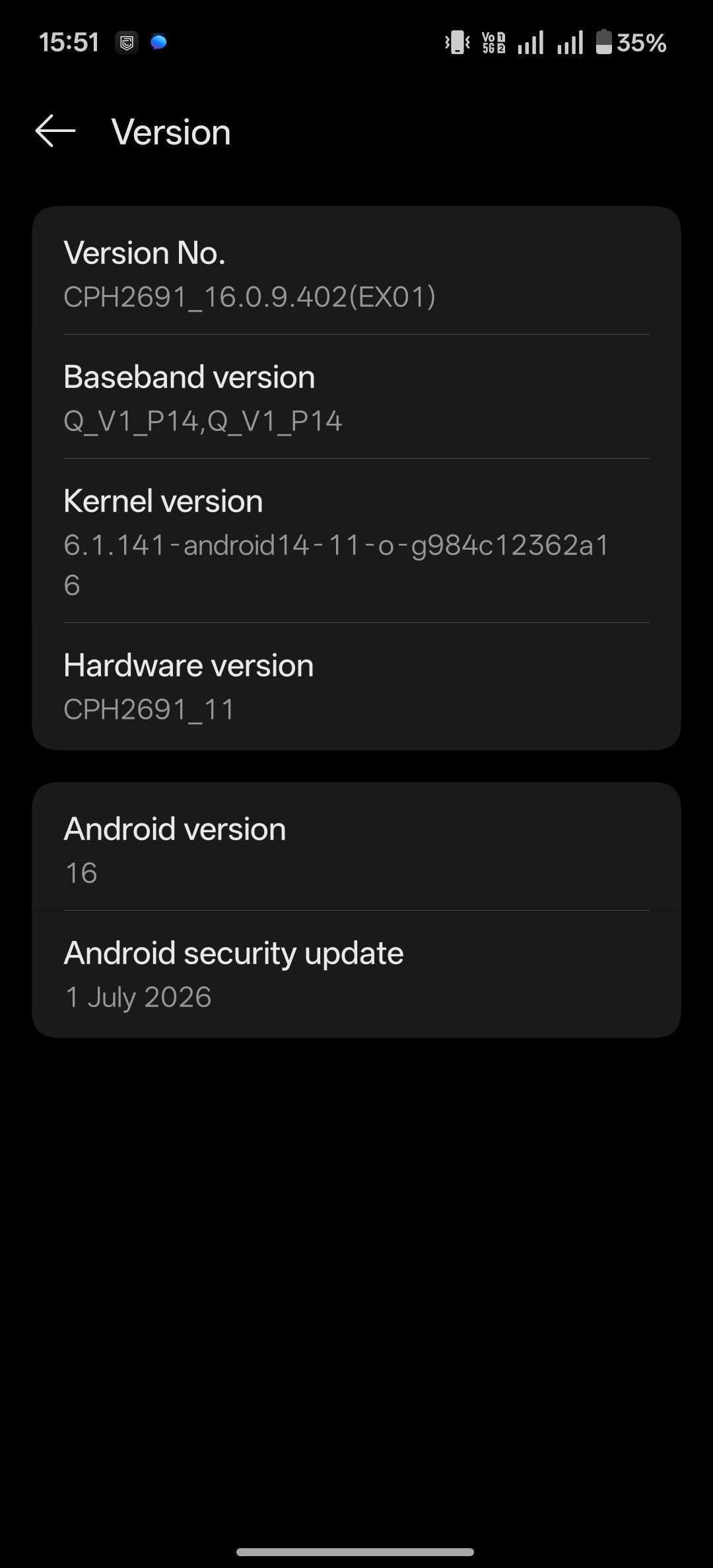
Open **Settings** and search for **Build number** (or **Version number**).
The exact location differs by brand, so searching is the most reliable way to find it. It's usually under **About phone → Version**.
Tap **Build number** **7 times** in a row. You'll see a message confirming that **Developer Mode** (or Developer Options) is now enabled.
This is an Android safeguard, not a limit inside your CRM. You can raise it manually with a small tool we provide, so high-volume sending no longer trips the alert.
This changes a hidden system setting on your phone using **Android debugging**. It's safe and reversible, but only do it on a device you own and control. A few manufacturer ROMs gate this behind an extra toggle - see [Extra step for some phone brands](#extra-step-for-some-phone-brands).
## What you'll need
* The **Android phone** running your SMS gateway (Android 11 or newer for the Wi-Fi method).
* A **Windows, macOS, or Linux computer**.
* **One** of these connection methods:
* **USB (recommended):** a **USB cable**, and (on Windows) a working USB driver for your phone. If Windows doesn't recognize it, install your manufacturer's [OEM USB driver](https://developer.android.google.cn/studio/run/oem-usb?hl=en).
* **Wi-Fi (alternative):** the phone and computer on the **same Wi-Fi network** (Android 11 or newer). No cable or drivers needed.
You do **not** need to install ADB or any developer tools yourself. The tool below downloads everything it needs automatically.
***
## Step 1: Turn on Developer Options
The tool needs **Developer Options**, which is hidden by default.
Open **Settings** and search for **Build number** (or **Version number**).
The exact location differs by brand, so searching is the most reliable way to find it. It's usually under **About phone → Version**.
Tap **Build number** **7 times** in a row. You'll see a message confirming that **Developer Mode** (or Developer Options) is now enabled.
 If prompted, enter your **PIN / password**. Some brands also ask you to **sign in to your manufacturer account** (Mi, Vivo, etc.) before Developer Options can be turned on.
### Extra step for some phone brands
Some Android "skins" gate the SMS setting behind one more toggle in **Developer options**. If you have one of these brands, enable it now so the change can take effect:
Enable **USB debugging (Security settings)**. You usually need to be **signed in to a Mi account** with a **SIM inserted** for this toggle to be available.
Turn on **Disable permission monitoring**. Without this, ColorOS can silently block the command.
Enable **USB debugging (Security settings)**. This may require you to be **signed in to a Vivo account**.
Usually works with no extra toggle. If the command is refused, check whether a **Knox / work profile** is active on the device.
***
## Step 2: Download and launch the tool
Pick the tab for your computer's operating system. The tool downloads the required Android platform tools automatically on first run.
Download and unzip the Windows tool. Keep **both files in the same folder** - the `.bat` launcher needs the `.ps1` script next to it.
Contains `Raise SMS Limit.bat` and `raise-sms-limit.ps1`.
If prompted, enter your **PIN / password**. Some brands also ask you to **sign in to your manufacturer account** (Mi, Vivo, etc.) before Developer Options can be turned on.
### Extra step for some phone brands
Some Android "skins" gate the SMS setting behind one more toggle in **Developer options**. If you have one of these brands, enable it now so the change can take effect:
Enable **USB debugging (Security settings)**. You usually need to be **signed in to a Mi account** with a **SIM inserted** for this toggle to be available.
Turn on **Disable permission monitoring**. Without this, ColorOS can silently block the command.
Enable **USB debugging (Security settings)**. This may require you to be **signed in to a Vivo account**.
Usually works with no extra toggle. If the command is refused, check whether a **Knox / work profile** is active on the device.
***
## Step 2: Download and launch the tool
Pick the tab for your computer's operating system. The tool downloads the required Android platform tools automatically on first run.
Download and unzip the Windows tool. Keep **both files in the same folder** - the `.bat` launcher needs the `.ps1` script next to it.
Contains `Raise SMS Limit.bat` and `raise-sms-limit.ps1`.
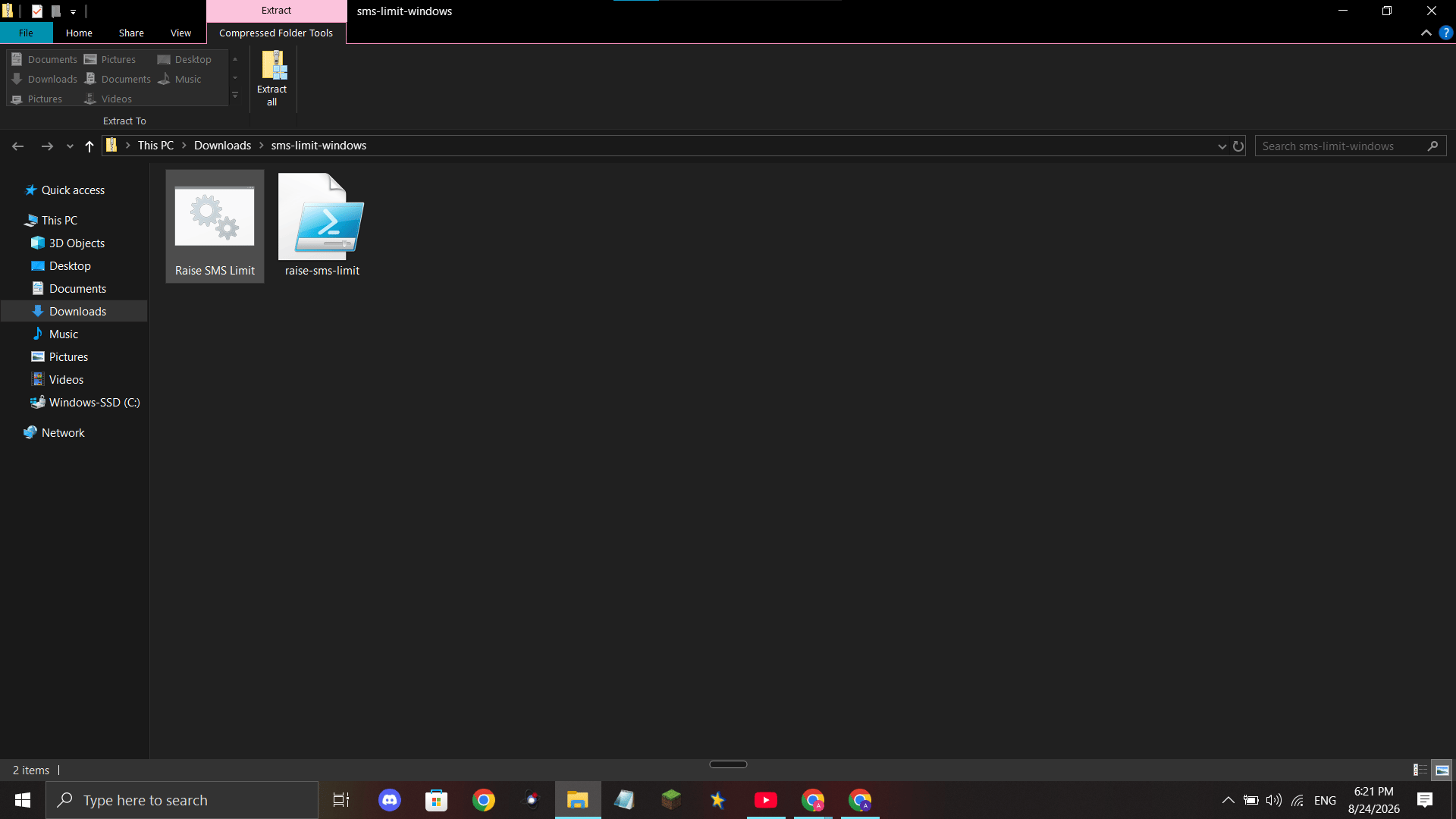 Double-click **`Raise SMS Limit.bat`**. A terminal window opens and downloads the platform tools on first run.
Continue with [Step 3: Connect your phone](#step-3-connect-your-phone-when-the-tool-asks) when the tool asks how to connect.
Download and unzip the macOS / Linux tool.
Contains `raise-sms-limit.sh`.
Open **Terminal** in the folder where the script is and run:
```bash theme={null}
bash raise-sms-limit.sh
```
The script downloads the platform tools on first run.
Continue with [Step 3: Connect your phone](#step-3-connect-your-phone-when-the-tool-asks) when the tool asks how to connect.
***
## Step 3: Connect your phone when the tool asks
The tool asks **how you want to connect your phone**:
```text theme={null}
How do you want to connect your phone?
1) Wi-Fi - no USB drivers needed. Android 11 or newer. RECOMMENDED.
2) USB - needs the phone to be recognised over cable.
```
We recommend the **USB** method - type **`2`** and press **Enter**, then follow the USB tab below. (Wi-Fi works too if you'd rather not use a cable.)
On the phone, go to **Developer options → USB debugging** and turn it **on**.
Double-click **`Raise SMS Limit.bat`**. A terminal window opens and downloads the platform tools on first run.
Continue with [Step 3: Connect your phone](#step-3-connect-your-phone-when-the-tool-asks) when the tool asks how to connect.
Download and unzip the macOS / Linux tool.
Contains `raise-sms-limit.sh`.
Open **Terminal** in the folder where the script is and run:
```bash theme={null}
bash raise-sms-limit.sh
```
The script downloads the platform tools on first run.
Continue with [Step 3: Connect your phone](#step-3-connect-your-phone-when-the-tool-asks) when the tool asks how to connect.
***
## Step 3: Connect your phone when the tool asks
The tool asks **how you want to connect your phone**:
```text theme={null}
How do you want to connect your phone?
1) Wi-Fi - no USB drivers needed. Android 11 or newer. RECOMMENDED.
2) USB - needs the phone to be recognised over cable.
```
We recommend the **USB** method - type **`2`** and press **Enter**, then follow the USB tab below. (Wi-Fi works too if you'd rather not use a cable.)
On the phone, go to **Developer options → USB debugging** and turn it **on**.
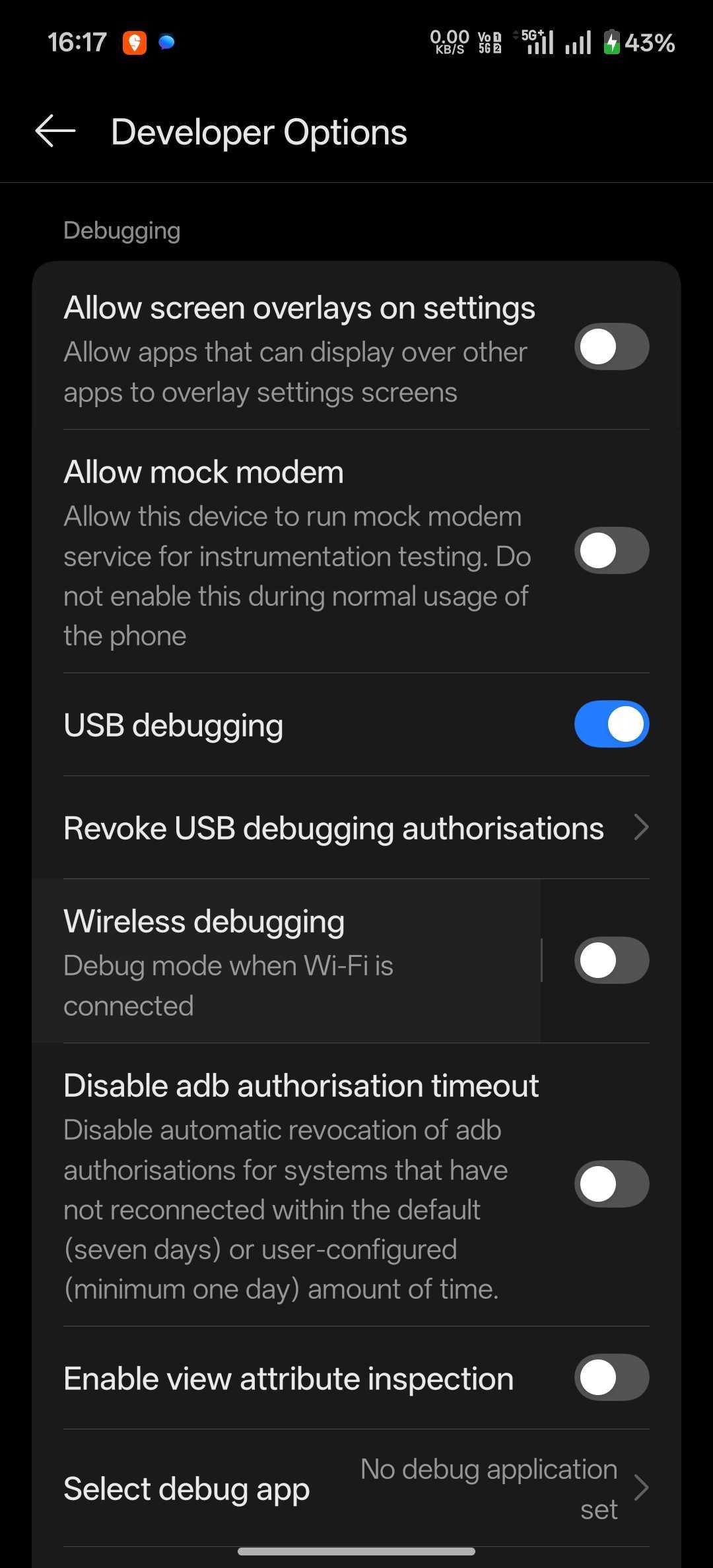 Plug the phone into your computer with a **USB cable**, then press **Enter** in the tool.
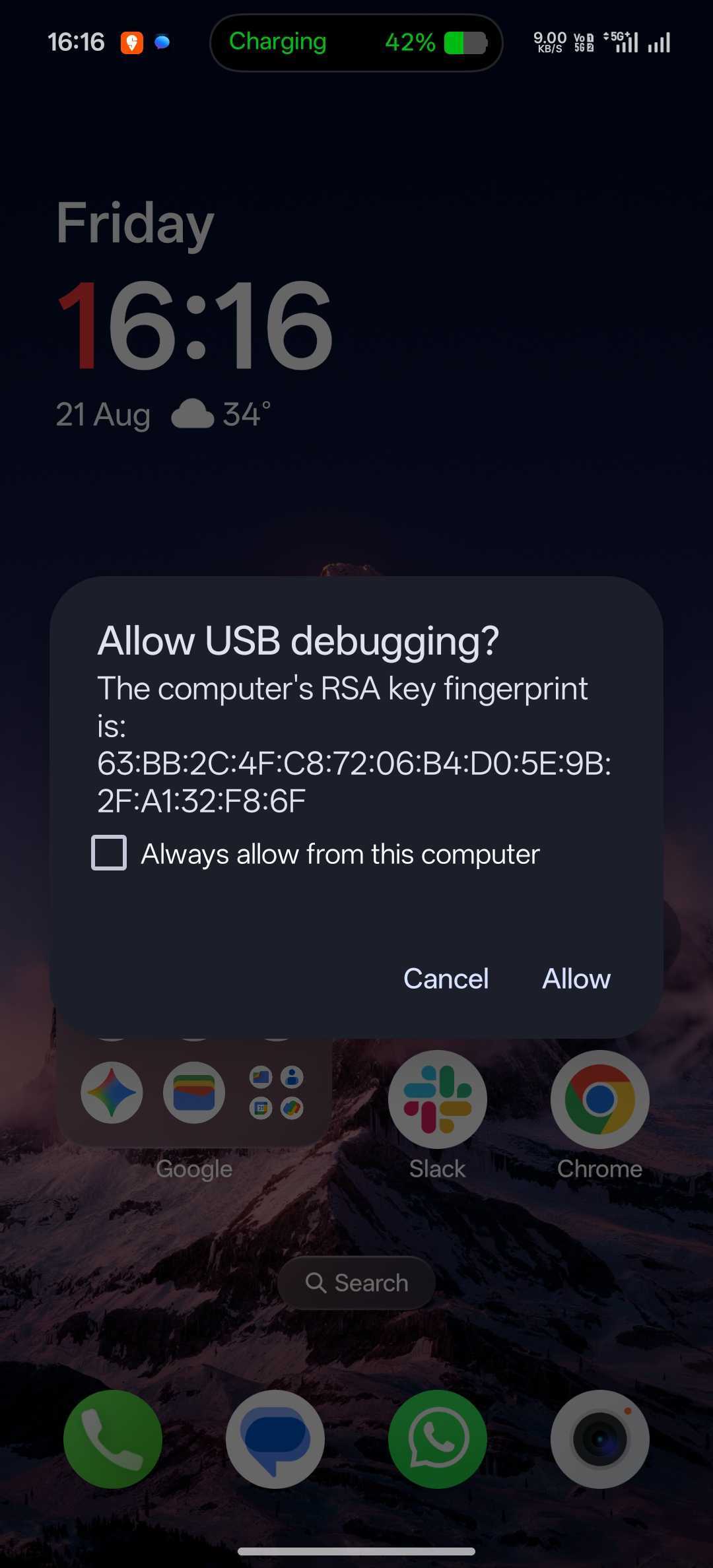
Look at your **phone screen**: tap **Allow** on the **Allow USB debugging?** prompt. Tick **Always allow from this computer** first if you'd like to skip this next time.
Plug the phone into your computer with a **USB cable**, then press **Enter** in the tool.
Look at your **phone screen**: tap **Allow** on the **Allow USB debugging?** prompt. Tick **Always allow from this computer** first if you'd like to skip this next time.
 If the phone never appears, the cable may be charge-only or Windows may be missing the **OEM USB driver** for your phone. Install your manufacturer's driver from Google's list - [Install OEM USB drivers](https://developer.android.google.cn/studio/run/oem-usb?hl=en) - then reconnect. Or use the **Wi-Fi** method instead, which needs no cable or drivers.
Use this only if USB isn't an option. Make sure the phone and computer are on the **same Wi-Fi network**.
On the phone, go to **Developer options → Wireless debugging** and turn it **on**.
Tap **Pair device with pairing code**. The phone shows a **6-digit code** and an **"IP address & Port"** line.
Back in the tool, enter that pairing **IP address & Port** (for example, `192.168.1.5:37021`), then the **6-digit code** when asked.
Go **back** to the main **Wireless debugging** screen. It shows a **different** port under "IP address & Port" - that's the connection address.
Enter that **connection IP address & Port** (for example, `192.168.1.5:41253`) in the tool.
The pairing code and ports **rotate**. If it fails, re-open the Wireless debugging screen for fresh values and run the tool again.
***
## Step 4: Confirm the new limit
Once connected, the tool writes the new values and prints **Done. New limit: 10000 messages per 15 minutes**.
```text Windows theme={null}
Current limit: 10000 (null = using the built-in default of 30)
Done. New limit: 10000 messages per 15 minutes.
```
```text macOS / Linux theme={null}
Current limit: 10000 (null = using the built-in default of 30)
Writing sms_outgoing_check_max_count 10000 ...
Writing sms_outgoing_check_interval_ms 900000 ...
Verifying ...
Done. New limit: 10000 messages per 15 minutes.
```
If the phone never appears, the cable may be charge-only or Windows may be missing the **OEM USB driver** for your phone. Install your manufacturer's driver from Google's list - [Install OEM USB drivers](https://developer.android.google.cn/studio/run/oem-usb?hl=en) - then reconnect. Or use the **Wi-Fi** method instead, which needs no cable or drivers.
Use this only if USB isn't an option. Make sure the phone and computer are on the **same Wi-Fi network**.
On the phone, go to **Developer options → Wireless debugging** and turn it **on**.
Tap **Pair device with pairing code**. The phone shows a **6-digit code** and an **"IP address & Port"** line.
Back in the tool, enter that pairing **IP address & Port** (for example, `192.168.1.5:37021`), then the **6-digit code** when asked.
Go **back** to the main **Wireless debugging** screen. It shows a **different** port under "IP address & Port" - that's the connection address.
Enter that **connection IP address & Port** (for example, `192.168.1.5:41253`) in the tool.
The pairing code and ports **rotate**. If it fails, re-open the Wireless debugging screen for fresh values and run the tool again.
***
## Step 4: Confirm the new limit
Once connected, the tool writes the new values and prints **Done. New limit: 10000 messages per 15 minutes**.
```text Windows theme={null}
Current limit: 10000 (null = using the built-in default of 30)
Done. New limit: 10000 messages per 15 minutes.
```
```text macOS / Linux theme={null}
Current limit: 10000 (null = using the built-in default of 30)
Writing sms_outgoing_check_max_count 10000 ...
Writing sms_outgoing_check_interval_ms 900000 ...
Verifying ...
Done. New limit: 10000 messages per 15 minutes.
```
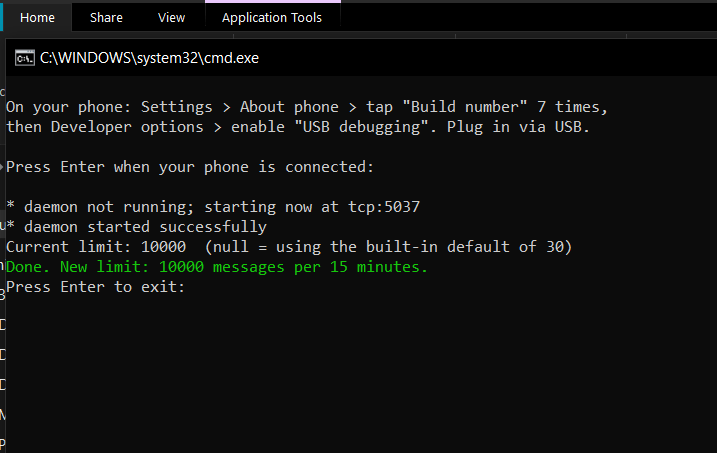
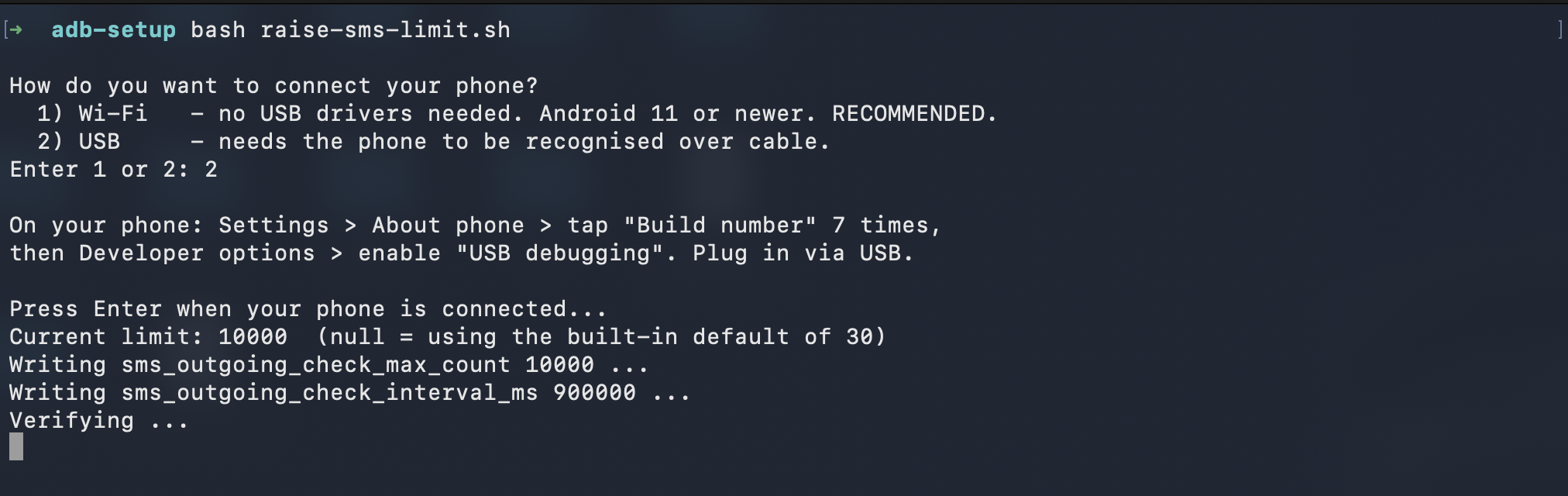 A new limit of **10000 messages per 15 minutes** is high enough that normal gateway sending will no longer trigger the warning.
***
## Confirm it worked
Send a batch of messages from your CRM as you normally would. The **"SMS Sync is sending a large number of SMS messages"** warning should no longer appear.
The change stays in place until the phone is factory reset. If you connected over USB, you can unplug the cable straight away - it's only needed while the tool runs.
***
## If it doesn't work
If the tool reports **"The setting did not stick,"** or you saw a **SecurityException about `WRITE_SECURE_SETTINGS`**:
* The adb shell isn't privileged on this ROM. Enable the [brand-specific toggle](#extra-step-for-some-phone-brands) for your device (for example, ColorOS's **Disable permission monitoring**, or **USB debugging (Security settings)** on Xiaomi/Vivo), then run the tool again.
* A few **Samsung and Xiaomi** ROMs enforce their own SMS guard that overrides this setting entirely - on those devices this method can't raise the limit.
* If pairing or connecting failed, re-open the phone's **Wireless debugging** screen for fresh values (the code and ports rotate) and try again.
If you're still stuck, reach out to support below and let us know your phone brand and model.
***
## Support
If you need help increasing the SMS limit:
* WhatsApp Support: [Chat on WhatsApp](https://wa.me/+12267248710?text=Hi%2C%20I%20need%20help%20increasing%20my%20SMS%20sending%20limit.)
* Email: [**support@goghl.ai**](mailto:support@goghl.ai)
A new limit of **10000 messages per 15 minutes** is high enough that normal gateway sending will no longer trigger the warning.
***
## Confirm it worked
Send a batch of messages from your CRM as you normally would. The **"SMS Sync is sending a large number of SMS messages"** warning should no longer appear.
The change stays in place until the phone is factory reset. If you connected over USB, you can unplug the cable straight away - it's only needed while the tool runs.
***
## If it doesn't work
If the tool reports **"The setting did not stick,"** or you saw a **SecurityException about `WRITE_SECURE_SETTINGS`**:
* The adb shell isn't privileged on this ROM. Enable the [brand-specific toggle](#extra-step-for-some-phone-brands) for your device (for example, ColorOS's **Disable permission monitoring**, or **USB debugging (Security settings)** on Xiaomi/Vivo), then run the tool again.
* A few **Samsung and Xiaomi** ROMs enforce their own SMS guard that overrides this setting entirely - on those devices this method can't raise the limit.
* If pairing or connecting failed, re-open the phone's **Wireless debugging** screen for fresh values (the code and ports rotate) and try again.
If you're still stuck, reach out to support below and let us know your phone brand and model.
***
## Support
If you need help increasing the SMS limit:
* WhatsApp Support: [Chat on WhatsApp](https://wa.me/+12267248710?text=Hi%2C%20I%20need%20help%20increasing%20my%20SMS%20sending%20limit.)
* Email: [**support@goghl.ai**](mailto:support@goghl.ai)